
Mommy's Choice: Why I'm Home, and How Amazing It Is!
Vineetha Madhu
7/15/20254 min read
Being a mom is the best job in the world. It's challenging, rewarding, and full of love.
As your child grows, they naturally start observing the world around them and asking questions. One question that might come up, especially as they meet friends whose moms work outside the home, is: "Why are you a stay-at-home mom?"
Explaining your decision to your child is a wonderful opportunity to not only clarify your role but also to instill in them a deep appreciation for the value of being a homemaker and the quality of life that can bring.
Here's how you can approach this conversation:
1. Start with Love and Reassurance:
The most important thing is to begin by expressing your unconditional love for your child. This sets a positive tone and reinforces the idea that your decision comes from a place of love and dedication.
You are my priority:
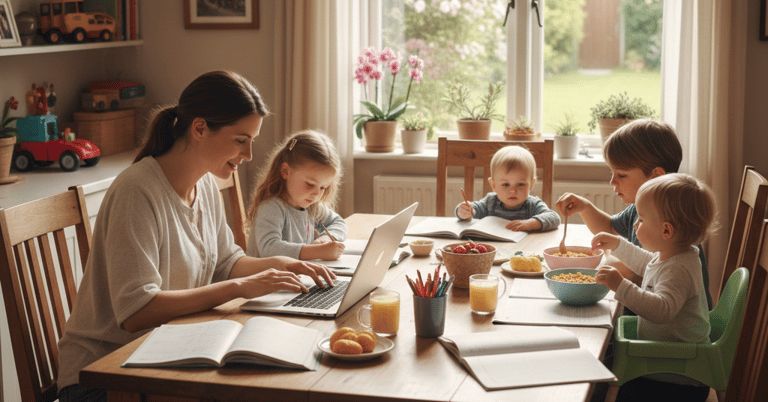
Being a stay-at-home mom allows me to dedicate my time and energy to taking care of you directly. I get to be there for your milestones, big and small. I get to see your first wobbly steps, hear your first words, and comfort you when you're feeling sad. I get to witness your amazing growth and development firsthand.



Building a strong bond together:
The time we spend together, playing, reading, and exploring, helps us build a strong and loving bond. These early years are crucial for developing a secure attachment, which helps you feel safe and loved.
2. Explain Your Choice in Simple Terms:
Avoid complex explanations. Instead, focus on the benefits for your family. For younger children, you can say something like, "I chose to stay home so I could be here for you. I wanted to be the one to take you to the park, read you stories, and help you with your homework. I love being able to do those things!"
For older children, you can be a bit more detailed. Talk about the benefits, such as:
More Time and Attention: "Staying home allows me to be more present in your life. I can be there to help you with school projects, listen to your stories, and be a consistent presence in your daily routine."
A Supportive Home Environment:
"I also wanted to create a warm and comfortable home where you feel loved and supported. That means keeping things organized, making nutritious meals, and creating a space where you can relax and be yourself."
Flexibility and Involvement:
"Being home gives me the flexibility to volunteer at your school, participate in your activities, and be available when you need me most."
3. Emphasize the Value of Homemaking:
It's crucial to highlight that being a homemaker is a valuable and fulfilling role. Explain that:
Homemaking is a real job: "Taking care of a house and a family is a lot of work! I'm a chef, a cleaner, a teacher, a nurse, and so much more, all rolled into one!"
It requires skills and dedication:
"It takes a lot of planning, organization, and hard work to keep our home running smoothly. I'm constantly learning new things and using my skills to make our lives better."
It contributes to the family's well-being:
"By taking care of the home front, I free up your dad (or other working parent) to focus on their career and provide for our family in other ways. We're a team!"
4. Addressing the Comparison to Working Moms:
Children might wonder if you staying home means you're somehow less ambitious or less accomplished than moms who work outside the home. It's important to address this directly, but with sensitivity:
All moms are amazing:
"There are so many different ways to be a great mom. Some moms work outside the home and are amazing at balancing their careers and their families. Other moms, like me, choose to stay home, and that's a wonderful choice too. The most important thing is that a mom loves her child and does her best to support them."
Different paths, same love:
"There's no right or wrong way to be a mom. Every family is different, and what works for one family might not work for another. What matters most is that we're all doing what we believe is best for our children."
Highlight your own skills and passions:
Even if you're a stay-at-home mom, you likely have other interests and talents. Talk about your hobbies, volunteer work, or any personal projects you pursue. This shows your child that you are a multifaceted person with interests beyond just being a mom, and that staying at home is a choice, not a limit.